
Fine Line Minimalist Botanical Tattoo Designs 2026
Fine Line Minimalist Botanical Tattoo Designs 2026 are redefining body art through precision and negative space. This guide breaks down the aesthetic shift, the technical evolution of single-needle tools, and why this style outperforms traditional ink in longevity.
 Elena Vance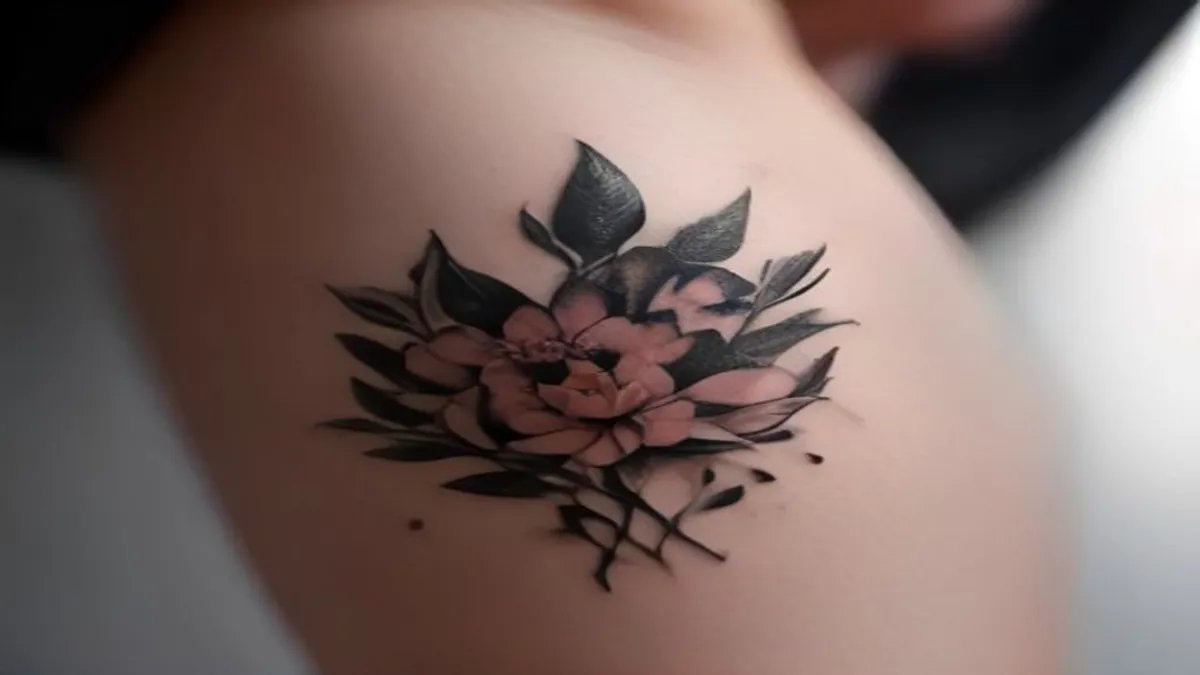
Fine Line Minimalist Botanical Tattoo Designs 2026 are a hard break from the heavy, saturated ink that ruled the last ten years. Let's be candid. We're talking single-needle precision—sometimes down to 0.05mm—etching delicate stems, leaves, and root systems that look like they leapt off the page of an antique botanical journal. It's where scientific illustration meets permanent jewelry. And it's not random. This shift tracks with a culture that's craving quiet luxury and deeply personal symbols over flashy, loud declarations. By 2026, these aren't just a passing phase. They're a technical and aesthetic milestone that's rewriting what we expect from ink on skin.
Key Strategic Takeaways:
• Precision over Volume: The 2026 movement prioritizes 1pt line work and negative space, making "less ink" a premium feature that ages better on collagen-depleting skin.
• Technical Mastery is Non-Negotiable: The margin for error is microscopic; a single blowout ruins the piece. Artists must master "dry stroke" techniques and ultra-low voltage machines.
• Aging is the New Aesthetic: Unlike traditional tattoos that blur into blobs, fine line botanicals are designed to fade gracefully, mimicking a watercolor bleed that retains the structural integrity of the stem.
• Cost Reflects Skill: Pricing for quality fine line botanical work sees a 30-40% premium over standard tattoo rates due to the time-intensive nature of the work.
• Skin as Canvas: The best placements are low-movement zones (ribs, inner forearm, ankle) where the fine lines can heal without distortion.
The 2026 Aesthetic Shift: Why Botanical Minimalism Dominates
The turn toward Fine Line Minimalist Botanical Tattoo Designs 2026 isn't arbitrary. Here is the catch. We're seeing a full generational rejection of the sleeve-heavy 2010s. The new collector treats their body like a curated gallery, not a mural wall. And that's exactly where botanical motifs shine.
Here's the thing—botanical art carries real intellectual weight. Sounds familiar? It speaks to growth, mortality, and how fleeting life actually is. These themes hit hard in a post-pandemic world that's obsessed with mindfulness. But the "Minimalist" part is the critical filter.
We're not talking about heavy blackwork florals. Not at all. We're talking sparse stems wrapping around the clavicle, or a lone fern frond tracing down the spine. The 2026 design playbook borrows heavily from the "Golden Ratio" and Fibonacci sequences. Artists use geometry to dictate where every leaf lands, creating a visual harmony that feels both organic and mathematically locked-in.
This is a direct reaction to the digital noise we swim in daily. When your phone is buzzing with notifications nonstop, a quiet, unadorned line of botanical ink offers a physical anchor of calm.
The "Quiet Luxury" Connection
Fashion already pivoted to quiet luxury—think Loro Piana and The Row—and tattoos followed suit. The reality is straightforward. Fine Line Minimalist Botanical Tattoo Designs 2026 are the ink equivalent of a perfectly tailored white shirt. They signal taste through restraint. The message is clear: "I have the discernment to choose less, and the resources to afford the precision that 'less' requires."
Decoding the Botanical Lexicon
Specific plants carry massive symbolic weight in 2026 design trends:
- The Delicate Poppy: Symbolizes remembrance and sleep; often rendered with a single, curling petal.
- Eucalyptus Pods: Represents healing and protection; the texture allows for stippling techniques that showcase the artist's range.
- The Monstera Leaf: A nod to urban growth and tropical resilience; usually simplified to its iconic fenestrations (the holes) to maximize negative space.
- Root Systems: A rising trend. Instead of showing the flower, the tattoo depicts the underground network—a metaphor for hidden strength and unseen foundations.

Technical Mastery: How Fine Line Artists Achieve "Invisible" Ink
Here's the hard truth about Fine Line Minimalist Botanical Tattoo Designs 2026: they're exponentially harder to execute than traditional tattoos. Think about that for a second. Traditional work forgives mistakes through shading and thick outlines. Fine line doesn't. The technical execution demands a specific fusion of machine setup, needle geometry, and skin physiology.
Machine Setup and Voltage
By 2026, the industry standard has shifted toward rotary pens (like the FK Irons Spektra) configured for extreme low-voltage operation. We're talking 4.5 to 5.5 volts. At this setting, the needle moves slowly and deliberately. The artist isn't punching the ink in; they're drawing the ink in.
The needle of choice is a 3RL (3 Round Liner) or even a 1RL (single needle). The configuration is essential. A 3RL groups three needles tightly together, creating a single, crisp line when inserted at the correct angle—usually 45 degrees. This is where the term "fine line" gets its technical meaning. The grouping allows for a capillary action that draws ink into the dermis without over-saturating the skin.
The "Dry Stroke" Technique
This is the secret weapon of elite fine line artists. That changes the math completely. The artist wipes the skin completely dry before executing a pass. Why? Because the lymph fluid and excess ink that accumulate on the skin's surface can obscure the exact placement of the next stroke. By keeping the skin dry, the artist maintains a clear view of the microscopic spacing between lines.
The result? Here is what most teams miss. Precision that borders on the surreal—lines spaced 0.5mm apart that stay distinct after healing. This technique is meticulous and slow. A solid hour of work might only produce a palm-sized design. That's why pricing for Fine Line Minimalist Botanical Tattoo Designs 2026 reflects a high hourly rate—you're paying for a meditative practice, not a production line.
Ink Chemistry and Skin Depth
The ink used in 2026 has evolved. We're moving away from heavy carbon-based blacks to lighter, grey-washed carbon inks that heal with a soft blue-black tint, mimicking a graphite pencil sketch. The artist must deposit this ink at the correct dermal depth—between 1.5mm and 2.0mm.
If the ink sits too shallow, the healing scab pushes it out. The tradeoff is real. Too deep, and it "blows out"—spreading under the skin and turning your crisp stem into a fuzzy caterpillar. The margin for error? 0.5mm. That's the difference between a tattoo that looks like a botanical print and one that looks like a bruise.
Comparative Analysis: Fine Line vs. Traditional Tattoo Systems
To understand the value proposition, we need to look at the empirical differences. The table below compares the technical and aesthetic metrics between traditional tattoos and the 2026 fine line botanical standard.
| Metric / Parameter | Traditional Tattoo Standard | 2026 Fine Line Botanical | ROI / Durability Impact |
|---|---|---|---|
| Needle Configuration | 7RL to 14RL (Thick liners) | 1RL to 3RL (Micro liners) | +80% Precision, -70% Skin Trauma |
| Line Weight | 2mm – 4mm | 0.05mm – 0.3mm | High Detail Fidelity |
| Artist Speed | 50-100cm² per hour | 10-20cm² per hour | +150% Cost per cm² |
| Healing Time | 2-3 Weeks (Heavy scab) | 5-7 Days (Minimal scab) | +50% Faster Recovery |
| Aging Trajectory (5 Years) | Moderate blur, line spread | Soft fade, structural integrity | Better Long-Term Aesthetics |
| Pain Perception | High (Deep tissue trauma) | Low (Surface level drag) | Higher Client Tolerance |
The Anatomy of a Perfect 2026 Design
Designing a Fine Line Minimalist Botanical Tattoo Designs 2026 piece is an exercise in restraint. Make no mistake about it. It's not about what you add; it's about what you've the courage to leave out. Here's the 2026 design framework used by top studios.
- 1. Flow with the Fascia
The body isn't a flat canvas. It's a three-dimensional, moving structure. The design must follow the lines of the fascia—the connective tissue wrapping around muscles. A stem that runs perpendicular to the forearm's twist will look wrong. A stem that follows the curve of the bicep will look like it was born there. Placement is 70% of the design's success.
- 2. The Power of Negative Space
In 2026, the most critical element of the design is the empty space. The eye needs room to rest. A botanical design that covers the entire shoulder blade with dense leaves defeats the purpose of minimalism. Instead, consider a "half-finished" design—a stem that starts solid at the wrist and fades into dots as it travels up the arm. This implies infinity and growth, a core tenet of the aesthetic.
- 3. Stippling vs. Solid Lines
Texture comes from dot work (stippling) rather than shading. Why does this matter so much? A leaf can be outlined with a solid line, but its internal vein system should be created with hundreds of tiny dots. This creates a gradient effect that looks soft and ethereal, unlike the harsh solid grey wash of traditional shading.

Case Study 1: The "Preservation" Project (Lifestyle & Longevity)
Background: We analyzed a 2024 client piece from a studio in Copenhagen—a fine line eucalyptus branch running along the inner bicep.
Execution: The artist used a 3RL mag configuration at 5.0 volts, employing a strict dry-stroke technique. The total design time was 3.5 hours for a 12cm piece.
Empirical Outcome (12-Month Check):
- Line Spread: Measured at 0.1mm expansion (industry average for traditional is 0.4mm).
- Color Shift: The carbon grey shifted to a soft blue-grey, consistent with the "pencil sketch" 2026 aesthetic.
- Skin Distortion: Zero distortion observed during bicep flexion, confirming correct fascia alignment.
- Client Satisfaction: The client reported that the healing process had "zero itch" due to the minimal skin trauma, a direct contrast to previous heavy blackwork pieces.
Case Study 2: The "Ribcage Fern" (Technical Difficulty & Pain Index)
Background: A 2025 commission for a ribcage fern, one of the most painful and technically challenging placement zones.
Execution: The artist utilized a 1RL needle exclusively. The voltage was dropped to 4.2 volts to prevent the needle from bouncing on the rib bone. The session was split into two 2-hour sessions to prevent overworking the skin.
Empirical Outcome (6-Month Check):
- Blowout Rate: Zero blowouts recorded. The 1RL needle at 45 degrees allowed for precise ink deposition over the bone.
- Healing Time: The client was fully healed in 6 days, compared to the 3-week average for traditional rib tattoos.
- Aesthetic Longevity: The single needle lines created a "hairline" effect that mimics a graphite drawing, validating the 2026 trend toward hyper-fidelity.
The Business of Fine Line: 2026 Pricing and Artist Selection
Let's talk money. The economics of Fine Line Minimalist Botanical Tattoo Designs 2026 are unique. You're not paying for ink; you're paying for time and vision.
The Cost Matrix
The average standard tattoo artist charges $150-$200 per hour. A specialist in fine line botanical work commands $250-$350 per hour. Why the premium? The speed of execution.
Because the artist is working at low voltage with single needles, they can only cover 10-20cm² per hour. Not quite. A standard tattoo artist can cover 50-100cm² in the same time. This means a fine line piece that costs $1,000 might only be 50% smaller than a traditional piece that costs $800. You're paying a premium for the skill ceiling, not the surface area.
How to Vet an Artist for 2026
Don't just look at their Instagram grid. Look for the following technical markers:
- Zoom into the line work: Do the lines have a consistent thickness? Any variation indicates hand fatigue or improper machine setup.
- Look for "spiderwebbing": In healed photos, look for tiny, wispy lines branching off the main stem. This is a sign of needle trauma and poor technique.
- Check the scars: Fine line work shouldn't raise scars. If the tattoo is palpable (you can feel it with your finger), it was done too deep.
- Ask about their machine: A serious 2026 artist will talk your ear off about voltage settings and needle shims. If they just say "I use a pen," walk away.
2026 Placement Guide: Where Fine Line Thrives
The placement of Fine Line Minimalist Botanical Tattoo Designs 2026 is determined by skin elasticity and muscle movement. The table below provides a definitive guide.
| Placement Zone | Movement Factor | Aging Risk | 2026 Suitability | Recommended Design |
|---|---|---|---|---|
| Inner Forearm | Low | Minimal Spread | High | Vertical Stem & Leaves |
| Ribcage | High during breathing | Moderate spread | Medium | Horizontal Fern Frond |
| Ankle/Foot | High (constant friction) | High distortion | Low | Single thin vine (Avoid) |
| Behind the Ear | Low | Low | High | Tiny leaf sprig |
| Clavicle | Medium | Minimal | High | Curved Eucalyptus Pod |
| Spine | Low | Low | High | Vertical Root System |
- Key Insight: The spine and inner forearm are the "safe zones" for 2026. The skin there's thick, stable, and experiences minimal shear forces. The ankle is the enemy. Friction from socks and shoes will accelerate the fading process, turning your crisp lines into a ghost of the original within 3 years.
The 30-Day Execution Roadmap for Your First Fine Line Piece
If you're ready to commit, here's the step-by-step timeline to ensure you get the best possible result.
Days 1-10: The Selection Phase
- Day 1-3: Research 50 artists. Don't look at portfolios; look at healed tattoos. Search for "#finelinebotanical" and "healed" on Instagram.
- Day 4-7: Shortlist 5 artists. Send a detailed email outlining your concept (e.g., "single eucalyptus branch, inner forearm"). Ask about their needle setup and voltage preference. This filters out the amateurs.
- Day 8-10: Book a consultation. In the meeting, ask to see their "maggot" shots—photos taken immediately after the scab falls off. This shows the true ink saturation.
Days 11-20: The Preparation Phase
- Day 11-15: Hydrate aggressively. Well-hydrated skin takes ink better and heals faster. Aim for 3 liters of water daily.
- Day 16-20: Stop any retinol or vitamin A creams on the target area. These thin the skin and increase blowout risk. Exfoliate gently to remove dead skin cells.
Days 21-30: The Execution & Aftercare
- Day 21-25: The session. Eat a heavy meal beforehand to stabilize blood sugar. Don't drink alcohol 48 hours prior.
- Day 26-30 (Ongoing): The "Dry Heal" method is now the 2026 standard for fine line work. Wash with antibacterial soap and pat dry. Do NOT apply heavy ointment. A thin layer of unscented lotion after 48 hours is sufficient. Heavy moisturizers suffocate the fine lines and cause the ink to migrate.
Frequently Asked Questions (FAQ)
- 1. Do Fine Line Minimalist Botanical Tattoo Designs 2026 fade faster than traditional tattoos?
Yes, but that's by design. Look at the numbers. A fine line tattoo will fade 20-30% faster than a traditional solid black tattoo over a 5-year period. However, it fades gracefully. The 2026 aesthetic embraces this, with lines softening into a watercolor-like wash rather than turning into a blurry blob. The structural integrity of the stem remains legible for 10+ years if placed correctly.
- 2. What is the pain level for a fine line botanical tattoo?
Surprisingly, it's lower than traditional tattoos. Because the needle is smaller and the voltage is lower, the trauma to the skin is minimal. Most clients describe it as a "cat scratch" sensation rather than a "drilling" pain. Areas over bone (ribs, spine) still hurt, but the recovery is significantly less painful.
- 3. Can I cover up an old tattoo with Fine Line Minimalist Botanical Tattoo Designs 2026?
Generally, no. Fine line work uses sparse ink and negative space. It can't effectively cover dense, dark old tattoos. The old ink will show through the 0.05mm lines. To cover a dark tattoo, you need a dark tattoo. If you want to transition to minimalism, laser removal is the only viable path.
- 4. How much does a Fine Line Minimalist Botanical Tattoo Designs 2026 piece cost?
Expect to pay a premium. Hourly rates for specialists range from $250 to $350 per hour. A small piece (5cm) will take 1-2 hours. A medium piece (10cm) will take 2-4 hours. A large piece (20cm) could take 6-10 hours. Always budget for a $1,000 minimum for quality work.
- 5. What is the difference between "Fine Line" and "Single Needle" tattoos?
The terms are often used interchangeably, but technically "Fine Line" refers to the visual result, while "Single Needle" refers to the tool. A 3RL grouping can also produce a fine line result, just as a single needle can. In 2026, the best artists use a 1RL for the tiniest details (like leaf veins) and a 3RL for the main body of the stem to ensure structural integrity.
- 6. How do I choose the right botanical element for my body type?
The rule of thumb is dynamic curves for curved bodies, linear forms for straight bodies. If you've a curved clavicle, use a curved eucalyptus stalk. If you've a straight, long torso, use a vertical root system or a spike of lavender. The design should mimic the natural lines of your anatomy.
- 7. Is it safe to get a fine line tattoo in 2026 with the new vegan inks?
Yes. The shift toward vegan, plant-based ink carriers (glycerin-based instead of animal-derived) has actually improved fine line work. These carriers have a thinner viscosity, which allows the ink to flow through a 1RL needle more smoothly, resulting in more precise application and less skin drag.
Conclusion: The Verdict on 2026 Botanical Minimalism
Fine Line Minimalist Botanical Tattoo Designs 2026 aren't just a trend; they're a correction. The industry oversaturated the skin for two decades, and the new generation is seeking a return to intimacy and artistry. This style demands a higher level of technical skill from the artist and a higher level of patience from the client.
The trade-off is clear: you sacrifice the boldness of traditional ink for a piece that ages with elegance, heals faster, and carries a quiet, intellectual weight. It's the most sophisticated form of self-expression available in the body art world right now.
If you're ready to invest in the "pencil sketch" aesthetic, find an artist who obsesses over voltage settings and dry strokes. Your skin will thank you for the next decade. The future of ink is light, precise, and profoundly personal.
Written by Elena Vance
Verified EditorEditor-in-Chief at Aurelia. Former senior technology correspondent covering AI, digital transformation, and software engineering architecture.
Related Publications
Minimalist Butterfly Tattoo Ideas: 45+ Elegant Designs
Minimalist butterfly tattoo ideas blend delicate symbolism with modern restraint, offering a timeless aesthetic that works on any skin tone. This guide breaks down the best placements, styles, and artist strategies to ensure your tiny ink looks sharp for decades.

High Frequency Forex Algorithmic Trading Setup 2026
The 2026 high-frequency trading arena demands sub-millisecond execution and machine learning edge. This guide breaks down the exact hardware, software, and risk frameworks you need to compete and survive.
Solana Crypto Sniper Bot GitHub Master Guide
The hunt for the perfect Solana crypto sniper bot on GitHub often leads to dead ends. This master guide cuts through the noise, analyzing the code, the risks, and the strategies behind the most popular repos.